Showing posts with label cancer. Show all posts

Saturday, January 2, 2016

Scout (April 28, 2008 to December 29, 2015)

Scout passed away last Tuesday evening. The hopes we had that the pancreatic tumor could be surgically removed and that Scout would return to his old self were not met. The surgeon called us just fifteen minutes after beginning the procedure to tell us that the tumor was not on his pancreas but on a lymph node in the same area, that it had grown significantly since the ultrasound, and that it was located in an area where it would be impossible to remove it successfully. He said our options were to have Scout closed up and hope that he survived recovery to live out his final days as he was before the surgery, or to have him put to sleep on the operating table. In my imagined list of possible outcomes, this was the worst one possible.

Nan and I took a few brief, tearful minutes and decided that the most humane thing we could do was to request that Scout be put to sleep, as much as it pained us to lose him so suddenly. I couldn't believe that our wonderful seven-year-old dog could go from being healthy and happy to being gone from this earth in less than six weeks. That is the terrible unfairness of cancer.

To those who knew him, Scout was a special dog, so friendly and playful and goofy, more a big puppy than a mature dog. He was kind with adults, children, other dogs, even cats, but not with squirrels. We loved him and he loved us so much in return. He will live in our hearts forever.

Friday, December 25, 2015

Update on Scout

Scout and Nan at Harbour Town Marina last Saturday
The meeting with the veterinary oncologist instilled new hope for Scout's prognosis. Dr. Daters discussed the options with us and convinced us that surgery to remove the pancreatic tumor would be the most beneficial. He said it would immediately eliminate the symptoms associated with the high insulin and low blood sugar caused by the tumor, namely the partial lameness, lethargy, and occasional confusion. He cautioned that the cancer would return eventually but probably not for a year or two, which for a nearly eight-year-old dog is a considerable length of time added to his lifespan.

Instead of the Sandostatin medication we inquired about for lowering Scout's insulin levels, Dr. Daters recommended Diazoxide. Scout started on it last Tuesday and so far, there is no change in any of his symptoms. He is still taking Prednisone, and we have added the pain reliever Tramadol as a consequence of the groaning he emits when I lift and carry him.

Scout does not appear to be in pain but rather in a state of perpetual frustration. Inside the house, it is almost impossible for him to attain a standing position without assistance because his hind paws slip outward and put him into an awkward frog-like position. He will sometimes use his front paws to slide himself around on the tile and wooden floors, but he gets stuck and whines when he reaches a rug or can't turn around. We have been using a towel as a sling under his belly to lift him to a standing position and walk with him to prevent slips and falls. Outside, there is better friction and Scout can move around more freely, though his back legs are shaky and his back paws are turned in. He does not have the energy for a walk, even to the end of the block, but he enjoys the warmth and stimulation of lying out in the sun.

Surgery is scheduled for Tuesday. It will be less invasive than we first imagined, no more than the equivalent of a spaying procedure. I told Nan I am hoping for a small miracle. It would mean so much to us to have Scout return to his former self, if only for several months or a year. This may be a rationalization but I want to believe that Scout would want to be back to normal as much as we would want it for him.

Sunday, December 13, 2015

Scout's health

Scout on Sunday morning, December 13, 2015
Scout has been diagnosed with pancreatic cancer. An ultrasound last Tuesday revealed the cause of his recent hypoglycemia and back-leg lameness: a ping pong ball-sized tumor in his pancreas. The tumor is causing Scout's pancreas to produce excessive insulin, which is driving down his blood sugar and causing the symptoms we at first suspected were related to his spine or hip joints.

His shaved belly from the procedure is the only visible sign in the photo I took this morning that anything is different with Scout. He still has the same wonderful personality he has always had, and his appetite is undiminished. We have been feeding him smaller meals more frequently to keep his blood sugar steady and augmenting his regular diet with high-protein foods like scrambled eggs and cooked chicken to give him longer lasting energy between meals.

Scout with Nan at Tybee Island on Saturday, December 12, 2015
We are still trying to accept that this cancer is terminal and that Scout will eventually die from it, just as Charlie died from terminal bone cancer almost eight years ago. As we did with Charlie, we are opting not to put Scout through surgery to remove the tumor. It would be invasive and traumatic, and it would merely slow down the cancer, not eradicate it, even with chemotherapy or other postoperative therapies. He might gain a few months but at the expense of a long recovery and a lower quality of life. We would be selfishly putting our desire to keep him in our lives for as long as possible ahead of his natural right to die with dignity in his own time.

Scout walking with John on Tybee Island - December 12, 2015
The best we can hope for at this time is to treat Scout's symptoms, particularly the lameness which has required me to carry eighty-pound Scout up and down the stairs and lift him in and out of the car. In addition to the feeding changes, we have him on Prednisone to help stabilize his blood sugar, and we want to look into an insulin-lowering drug called Sandostatin when we meet with a veterinary oncologist on Tuesday. Our thinking is that if we can lower Scout's insulin levels, which in turn would allow his blood sugar levels to return to normal, then he would be able to move around as before, resume the long walks he loves so much, and live out the time he has left as well as possible.

Monday, August 31, 2009

Raising Charlie is on Amazon.com!

Charlie and me on Whidbey Island in August 2008There is no actual book yet that you could hold in your hands, but Raising Charlie is now available for purchase at Amazon.com. A representative from the publisher called me this morning to confirm a few details and within an hour, the book was available online.

The thrill of seeing the book in an Amazon.com listing will not match the thrill of seeing the actual book, but after more than a year of work, it feels like a pretty big deal. I have already sold a few advance copies through my RaisingCharlie.com website, so the first books I receive will go to fill those orders.

Now it's time to undertake some creative marketing to get the word out and get the sales rolling. Away we go!

Thursday, June 25, 2009

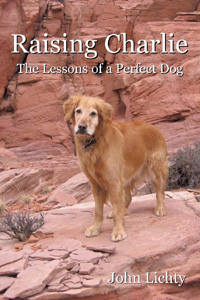
Raising Charlie: The Lessons of a Perfect Dog

Last week, I finished writing a memoir about Charlie, my golden retriever who died of cancer last year. It was emotionally difficult to write about his life, especially the last three months, after he was diagnosed with osteosarcoma, but it was also therapeutic. It helped me get over my grief, and it made me appreciate what a perfect dog he was.

I hope Charlie's story is one that dog lovers and others who have experienced the loss of a beloved pet will take to heart. He taught me many valuable lessons during his life, and I owe it to him to share them as a tribute to his memory. I know I am a better person for having had him in my life.

If you are interested in reading Raising Charlie: The Lessons of a Perfect Dog, please click Charlie's image near the top of this page to go to the RaisingCharlie.com website. The book will be published later this year, but you can reserve an inscribed copy now. Thank you.

Monday, April 14, 2008

The Abyss

It has been a week now since Charlie died and I am more depressed than I have been since adolescence. At moments I feel like I am teetering on the edge of the abyss, that if I'm not careful, I will give myself over entirely to despair.

I have experienced the grief of losing people close to me before, but losing a pet who was such a close friend and companion for so many years has exposed me to grief of a new magnitude. It is grief mixed with guilt and helplessness. People who are dying slowly from disease or at the end of a long life can communicate with words what they are going through. Dogs can't. They trust us to read their moods and expressions. There were times when I was sure Charlie was pleading with me, "Why aren't you helping me? Why aren't you making me better?" I could only look into his eyes with sorrow, feeling the guilt that I was somehow responsible for his cancer and the helplessness of knowing that it didn't matter what we did, his cancer was going to kill him. I'm sure he was thinking, "You fixed my knee when I injured it. Why can't you fix this?" He might as well have been praying to an indifferent God for all it would matter.

People who saw Charlie and me together would sometimes ask what I did to end up with such a good dog. I would tell them that we had formed a strong positive bond when he was just nine weeks old. It was based on praising the good behavior rather than punishing the bad. After a while, Charlie lived for that praise. He aimed to please. If I reprimanded him, he was devastated, sometimes sulking for hours under the furniture until he worked up the nerve to approach me and lick my hand in penance. The reassuring pat on the head would set his world back to rights every time.

The cancer violated our trust. Charlie received three months of continuous punishment without having done anything to deserve it. How could he be expected to understand? How could I expect him to forgive me?

Wednesday, April 9, 2008

Charlie

Charlie on his last dayCharlie passed away on Sunday evening.

He and I were walking our regular late afternoon loop out to the playground near our house, and on the way back he started bleeding from the mouth and getting frantic from the pain. Nan and I rushed him to the emergency pet clinic and they were able to stop the bleeding, but we agreed that it was time to end his suffering. We sat on the floor with him as they gave him an injection that put him to sleep and stopped his heart.

Reflecting on the day, it was as if Charlie sensed his time was coming to an end. He did everything he always did, from licking my elbow to wake me up in the morning to napping at my feet while I watched the afternoon Avalanche hockey game, but there was a noticeable distance to him. You can see it in the photo, which Nan took as we were working in the yard earlier in the day. He's not looking at Nan, he's looking somewhere else. You can also see how dramatically the tumor inside his mouth is swelling the left side of his face.

Even though he was mine, Charlie was still the best dog I have ever known. We formed a bond of love and friendship when he was just a few weeks old that lasted all of his ten years. I know it allowed him to be the smart, affectionate and well-behaved dog he became, and I know it made me a better person.

To honor Charlie's memory, I am writing a book about everything we did right with his upbringing so that others might experience the same rewarding dog and owner relationship. It will be titled Raising Charlie: The Lessons of a Perfect Dog.

Good night, sweet prince.

Saturday, March 29, 2008

Charlie's birthday

Charlie's birthday plaqueCharlie turned ten years old today. Three months ago, when he was first diagnosed with cancer, we weren't sure if he would still be alive for his birthday, but his condition has stabilized somewhat in the past few weeks and it now seems that he will surpass our most optimistic expectations. We certainly hope so, because in exactly three weeks, we leave for our Odyssey sailing trip and we'll be gone for three full weeks. If he's not doing well before we go, we're afraid he might die before we return.

Everyone we know is aware of Charlie's condition, so our regular network of dog sitters has not been forthcoming and we can't blame them. Nobody would want to have a friend's dog die while they were looking after him. Family is sometimes more sympathetic. My sister Jane has volunteered to take care of him while we're away. The only problem is that she lives in Seattle, more than a thousand miles away. Charlie has never flown and we're afraid it would be overly stressful on him, so I'm going to drive him up there and then fly back to start the trip, then fly to Seattle when we get back and drive him home. The things we do for our pets!

When Charlie was still a puppy, Jane gave us a paw print kit as a Christmas present. We set it aside for several years and then misplaced it during our move from Aspen to Grand Junction. Nan spent some time rummaging through the garage last week and finally found it. If we were ever going to take Charlie's paw prints, what better time could there be than his birthday? He was fairly cooperative and, as you can see, it turned out just fine for a project that involved working with wet cement. Note the missing nail on the left paw. He lost it tripping on a sidewalk while chasing a tennis ball last fall and it never grew back.

I'm sure this plaque will become for us what a child's plaster hand print is for mom and dad, something we'll cherish forever.

Sunday, March 16, 2008

Boat Quest, Part 9

Sea Hawk, a Valiant 40 for sale in Fort LauderdaleThe last weekend in November, I was searching for Valiant 40 sailboats online and looking beyond the OffshoreYachts.com and YachtWorld. com listings I routinely checked, when there she was: Sea Hawk! The very same boat I had motored past in Fort Lauderdale with John Kretschmer in January of 2007 (see Boat Quest, Part 7). The listing was brief, just a single photo (the one above), a list of features and a price of $49,000, but it included the phone number I had miscopied ten months before.

I vacillated a few days and then called the number. No answer. I left a message saying I knew the boat and I knew John Kretschmer and I was interested in finding out more. I waited a few days but never got a call back. I called again and got in touch with Harvey, the owner. He apologized for not calling back; he had just returned from the Bahamas. We talked for twenty minutes about how we each knew John, and about Sea Hawk and what was going on with her. Harvey listed off the included sail inventory and custom equipment, and said he was in the process of replacing the existing Westerbeke diesel engine with a rebuilt one. It sounded like a big project. I asked why the price was so low. He said that Sea Hawk was one of the Valiant 40 "blister boats" but that unlike most of the others with the blistered fiberglass on their hulls and topsides, hers had never been repaired. I knew the problem was purely cosmetic so I wasn't put off by it. The idea of buying a Valiant 40 for only $49,000 was too exciting.

Harvey asked when I could fly down to take a look. I hadn't thought that far ahead yet and said so. He suggested I contact John and have him take a look on my behalf. I said I would and asked if there were any other photos I could look at in the meantime. He said he would email me some. We agreed to stay in touch and ended the call.

I emailed John to tell him I had found Sea Hawk online and ask if he would be willing to drop by to take a look at her. He replied that he would. John is the author of Used Boat Notebook: From the pages of Sailing Magazine, reviews of 40 used boats plus a detailed look at 10 great used boats to sail around the world, so if there was anybody whose opinion I could trust, it was his. He called me after he had had a chance to talk with Harvey and look at Sea Hawk in person. He said that Harvey was still in the process of replacing the engine but that even with the mess involved in that project, she still looked "really rough." This surprised me. I said that I had closely studied the 49 photos Harvey had emailed me and that she didn't look too bad, maybe just the victim of deferred maintenance that could be rectified with solvent, varnish and plenty of elbow grease. He said if I was really interested I should fly down and take a look myself.

So I emailed Harvey and asked when he would be available during the upcoming weeks, by this time late January to early February. He didn't respond. I figured he was in the Bahamas again. About this time, in mid-January, we made the trip to the Animal Cancer Center in Fort Collins to get the diagnosis on our dog Charlie's cancer. When we found out how serious it was, Nan and I agreed to postpone any trips to Florida for now. The boat could wait. It was more important to be home taking care of Charlie.

Harvey finally emailed me back a couple of weeks ago. He had spent all of February in the Bahamas, but he was back and available if I wanted to fly down and see the boat. This time it was me who didn't respond. I just checked the listing site, SailboatTraderOnline.com, and Sea Hawk is still available for sale.

Sunday, March 9, 2008

On second thought...

Charlie at the petroglyph wall on the Hidden Valley Trail in Moab, UtahWe were in Moab, Utah over the weekend so Nan could run in the Canyonlands Half Marathon, like she does every year. While she was racing on Saturday morning, Charlie and I hiked the Hidden Valley trail just south of town. We like it because it's dog friendly, unlike the nearby Arches and Canyonlands National Parks, and it's usually not too crowded because it starts with a grueling rocky climb. The photo shows Charlie at our turnaround spot, a wall of ancient petroglyphs about two miles from the start. Click the photo for a larger version that shows the petroglyphs better.

As we were walking, I paid careful attention to Charlie for signs of his mouth bleeding or his endurance flagging, and I stopped frequently to squirt water from my CamelBak for him to drink. With his cancer, I wanted to make sure he didn't overexert himself. Fortunately, it was a cool and overcast morning, so the usual desert heat was not a factor. We have done this hike in the past when it was so hot that Charlie would stop and rest in every patch of shade.

Naturally, as I followed him up the trail, I was thinking about Charlie and his cancer, and something occurred to me. Charlie is one of those golden retrievers who spends about half of his waking life with a tennis ball in his mouth, or at least he did until we took them away to avoid aggravating the tumor in his mouth. I wondered if maybe the tennis balls had something to do with his cancer. Is there some chemical in them that is carcinogenic? A freshly opened can of tennis balls certainly smells toxic, but are the contents actually harmful? I searched on Google for "carcinogenic tennis balls" but not surprisingly, there were no good matches.

I think this was a kind of wishful thinking, a need to know the answer to the question of why this has happened. The veterinarians say there is no answer, but there's still a nagging feeling of guilt and regret: if only we had done something differently in Charlie's life, none of this would have ever happened. That's the problem with "why" questions. Even if we knew the answers, they wouldn't change what has already happened. All we can do is cope with the present situation as best we can.

Wednesday, March 5, 2008

Canary in a coal mine?

Since our dog Charlie was diagnosed with cancer two months ago, we have spoken with many pet owners who have had similar experiences. Their dog or cat was doing just fine and then one day there was a lump, or bleeding from the mouth. Within a few days, weeks or months, their beloved pet was dead, often before reaching ten years of age. It seems that pets who live long healthy lives and then die of old age are the exception these days, but I can't remember this always being true.

All these tragic early deaths make me wonder what the cause might be. Have we poisoned our environment so terribly that it is killing our pets? I know that Charlie will eat anything that seems remotely edible, including grass, sticks and garbage, so is it possible that his eating habits have resulted in the osteosarcoma growing in his upper jaw? The half-dozen veterinarians we have consulted don't know why he has it, and they're frankly surprised to see a cancer that normally attacks appendages take hold where it has. He has been through two chemotherapy treatments now, but they don't seem to be helping. The tumor in his mouth cavity has been removed twice, but it keeps regrowing and is now the biggest it has been, about the size of my thumb.

Charlie had a clear chest x-ray yesterday, indicating that the cancer has not yet spread to his lungs. He is scheduled to have the tumor "debulked" again tomorrow, and he is scheduled for a third chemotherapy treatment next Thursday. We're hoping the treatments will prevent, or at least slow, the growth of the tumor and the spread of the cancer, but based on what we have seen so far, that doesn't seem likely.

If our pets, who live protected, supervised lives, are being poisoned by the environment, what does that say for wildlife? What chance does it have fending for itself? No wonder we're losing species to extinction at a record rate. What about humans? Will the diseases resulting from our poisonous environment eventually outpace developments in medical technology and reverse gains in life expectancy? If the early deaths of our pets are any indication, we would know that we are already in deep trouble. The canary is already dead.

Friday, February 1, 2008

Charlie's chemotherapy

Yesterday morning Charlie started the chemotherapy protocol recommended by Dr. Dernell at the CSU Animal Cancer Center. I dropped him off at the local Tiara Rado Animal Hospital, where they took a chest x-ray and an echocardiograph to check for metastasis in his thorax and provide a baseline for his treatment. He was clear but there were two heart abnormalities: an 18% thinning of the left ventricular wall and a bunching of that ventricle's papillary muscles that almost looked like a tumor on the echocardiograph. Dr. Marquis is not sure if these conditions are related to Charlie's cancer but he was concerned because the Adriamycin that is a component of the protocol is known to cause ventricular thinning as a side effect of treatment. Dr. Marquis recommended that when Charlie returns in three weeks for the second treatment, with the Carboplatin component of the protocol, we should repeat the echocardiograph to check his heart. If there is additional thinning, we may need to look at alternatives or possibly abandon the chemotherapy.

We weren't sure what to expect after the first treatment, but when I picked Charlie up in the afternoon, he was his usual self, so happy to see me that he leaned into my legs and moaned. We went for a walk when we got home, and his endurance was the same. His appetite was good as well, so he doesn't appear to be showing any adverse side effects. If his heart holds up, the chemotherapy may work well to keep him comfortable and prolong his life. I'll keep you posted.

Saturday, January 26, 2008

Charlie's diagnosis

Charlie at the Lincoln Park pool in Grand Junction for Dog Daze in September 2007 Our worst fears were realized on Thursday evening when we received a call from Dr. Dernell. The results of Charlie's biopsy came back positive for osteosarcoma. Nan and I both took the news badly. It meant that there was no cure; the disease was going to kill him, probably within a matter of months. The traumatic surgery we had hoped would remove all traces of the tumor now seemed cruel if it was only going to gain him a few months, so we have opted not to put him through it. Instead we are going to begin a cycle of chemotherapy as soon as possible and hope for the best. If it slows the growth of the tumor and its metastasis, Charlie could survive as long as eight months.

We met with Dr. Dernell and Erin yesterday at the Animal Cancer Center in Fort Collins to discuss Charlie's future before driving home. They cautioned us that while he may be his normal self right now except for the tumor and the bad breath, he would soon start to experience persistent pain and associated changes in behavior. We agreed to enlist whatever palliative measures we could to keep him comfortable. They said we would see a gradual change in his attitude about life, that his focus would shift from the joys of eating, sleeping, chasing tennis balls and going for walks to a fixation on his condition and a loss of interest in everything else. At that point, he would begin the process of dying and we would need to consider ending his suffering instead of prolonging his life.

I can't even write these sentences without crying. I can't believe that just a month ago Charlie's life seemed to stretch out into the foreseeable future and now it will be over in less than a year. The best we can do is make the most of our remaining time together, giving him as much love and attention as possible, which is how we should all live our lives with each other no matter how much time we have.

Wednesday, January 23, 2008

Charlie update

This morning we met with Dr. Dernell from the Animal Cancer Center at Colorado State University in Fort Collins. After looking over the x-rays, CT scans and lab reports we brought with us and examining Charlie in person, he told us the cancer in Charlie's mouth could be one of four types, from the least severe to the most severe: fibrosarcoma, squamous cell carcinoma, melanoma or osteosarcoma. The first two would probably be benign and could be cured surgically. Melanoma would be malignant and might require radiation therapy or chemotherapy in addition to surgery. And osteosarcoma, which metastasizes quickly through the bones, would probably mean he didn't have long to live regardless of treatment.

What I thought were biopsies that had been done by Charlie's regular veterinarian were really cytology studies, looking for cancer cells in the fluid from the tumor and a nearby lymph node. Today Charlie is having an actual biopsy of the tumor tissue. Erin, the veterinary student who is assisting Dr. Dernell, just called to say that they removed a significant piece of the tumor for study. We should have the results tomorrow, with surgery scheduled for Friday. The biopsy will give a good indication of how aggressive the surgery needs to be to excise all of the cancer. At this point, they are expecting to remove the four top molars on the left side, along with a significant portion of the maxilla, orbital and zygomatic arch above them. His left eye will not be affected, but his face will be flattened somewhat on that side and his eye will point slightly outward until scar tissue develops to pull it back forward. His depth perception should not be affected.

Charlie is such a handsome dog it saddens me to think that he will never look quite the same again, but if there is a possibility that this treatment will enable him to live another five or so happy and healthy years, then it is definitely worth it. More tomorrow...

Thursday, January 17, 2008

My dog Charlie

My dog Charlie My dog Charlie will turn 10 years old on March 29; I will turn 50 in June. Charlie was my birthday present from my wife Nan when I turned 40. In a way, Charlie was meant to take the place of Rollie, our first golden retriever, whom we were forced to give up in 1992 when he was still a puppy, but that is a story for another time. Charlie was a very different puppy from the calm and lovable Rollie, and it took us some time to adjust to the differences. The fact that Charlie's father's name was Tuff, or that the breeder told us, "That one? He's so willful," should have tipped us off, but he was so adorable that we accepted the challenge.

Charlie was the kind of puppy who, when you gave him a command, would cock his head and stare at you, like "You're kidding, right?" It was obvious that he understood what was being asked of him, he just couldn't decide if he wanted to do it. Treats were usually the key. He would do anything for food. After Charlie figured out that I was boss and that the treats depended on his obedience, we developed a strong positive bond.

Rollie was never much of a retriever. I used to say about him, "He's not a golden retriever; he's just a golden." Toss a tennis ball at him and it would bounce off his nose. I was determined that Charlie would be different. He had good "eye-to-mouth" coordination, developed from catching treats out of the air, and he was a natural retriever, rolling balls back to me when he was still too small to fit them in his mouth. A tennis ball soon became a necessary component of every walk.

A couple of years ago, Charlie was retrieving tennis balls in a park with a couple of younger dogs. As they were running at full speed, one of the dogs broadsided him, blowing out the ACL and tearing the meniscus of his left back leg. He was immediately lame, unable to put weight on the leg without it collapsing. We opted for an expensive Tibial Plateau Leveling Osteotomy surgical procedure, and it was an amazing success. We figured that Charlie was a rough-and-tumble dog and it was unfair to him to not have the full use of his legs for the rest of his life. Two years later, you wouldn't know that he had ever had the surgery if you didn't feel the steel plate that is still screwed to his tibia bone.

Now we're facing a new health issue. On New Year's Eve afternoon, while I was teaching skiing up at Powderhorn, Nan took Charlie to the groomer and also requested a tooth brushing since his breath had been bad lately. When she got him home, he started bleeding from the mouth. She rushed him to an emergency pet clinic, where they discovered that he had a tumor in his mouth along the upper gum line by his back left molars. The brushing had aggravated it and caused it to bleed. The vets stopped the bleeding and told us we should get a full work-up to see if the tumor was malignant.

That was more than two weeks ago. Since then Charlie has had periodontal x-rays, tumor and lymph node biopsies, chest x-rays, a blood test, a urine test, and a CT scan. He has been to three different veterinary hospitals. The vets can't agree on what it is, whether it's amelanotic melanoma, fibrosarcoma or maybe squamous cell carcinoma, but they all agree that it will be difficult to remove. The CT scan revealed that the tumor has invaded the zygomatic arch and is dangerously close to the orbital, threatening the vision in Charlie's left eye. The foremost veterinary surgeon in the area summed up Charlie's prognosis as "guarded." He has recommended that we go to the veterinary college in Fort Collins for an assessment and possible surgery. We have an appointment next Wednesday.

Nan and I agree that we should do whatever is possible to help Charlie get better. He is our best friend and we love him dearly. Please think good thoughts for Charlie as he faces his uncertain future. I will let you know how it all goes.